

Who this guide is for (and why it matters in Logan)
If you live in Logan and you like fresh air and open living, you’re not alone. Most of us want a home that feels welcoming, not locked down. This guide is for Logan homeowners, and small business owners who want practical ways to improve security.
This article focuses on realistic steps to reduce risk, strengthen the parts of your home that matter most, and choose security screens and doors that suit Queensland living without reducing airflow.
What this guide will help you do
Understand what the local trend suggests (without fear-mongering).
Identify the most common weak points around homes.
Build layered protection: Deter → Delay → Detect → Respond.
Choose upgrades (especially security screens/doors) with compliance in mind.
What the Logan crime data suggests (Unlawful Entry)
Unlawful entry is one of the clearest signals for homeowners because it relates directly to people trying to access homes and properties without permission. Looking at the Logan District numbers since 2001, the pattern is pretty clear:
2001–2020: relatively steady year-to-year.
2021–2022: a noticeable step-change upwards. This coincides with the period when the broader social and economic impacts of COVID-19 began flowing through into day-to-day cost-of-living pressure, which hasn’t fully returned to pre-COVID benchmarks.
2023: the peak.
2024–2025: remains elevated (with a slight dip in 2025, but still well above pre-2021 levels).
For Logan, state crime statistics data (reported as an annual rate per 100,000 persons) reinforces that unlawful entry is the category most relevant to homeowners and the recent trend is comparable to, and at points exceeds, pre-2021 levels, which is exactly why physical barriers like security screens and doors matter now.
The key takeaway isn’t “Logan is bad”, it’s that opportunity prevention matters more than ever. Most break-ins aren’t movie-style smash-and-grabs. They’re about access: an easy door, a weak slider, a window that can be forced, or a garage entry that’s been overlooked.
The key trends at a glance
 Queensland Crime Statistics, Logan Unlawful Entries since 2021
Where the risk usually sits (without naming streets)
Instead of trying to guess “hot spots”, it’s more useful to look at the places intruders typically test first.
These are the Vulnerability zones: front and back doors, sliding doors, accessible windows, garages (especially the internal door from garage to house).
In some situations, such as when windows overlook or open to swimming pool areas, it’s essential to ensure compliance with Australian safety standards to prevent unauthorised access and enhance safety.
From here, we’ll walk through the layered approach that works best in homes, starting with physical barriers like security screens and doors.
DOWNLOAD OUR HOME SECURITY ASSESSMENT CHECKLIST
Home security basics: what you’re actually trying to achieve
When people think “home security”, they often jump straight to alarms and cameras. Helpful? Sometimes. But the real goal is simpler: make your home difficult to target, and make it obvious you’ll notice if someone tries.
Safety is also a key consideration in home security design, not just for protection from crime in Logan, but also for accident prevention and creating a secure living environment.
The core objectives
A good home security setup usually does a couple of things well:
Keep intruders out (delay entry): The longer it takes to get in, the more likely they’ll give up or move on.
Make your home look like a hard target (deterrence): If it looks protected and visible, most opportunistic intruders won’t bother.
Catch activity early (detection): The goal is to intercept the attempt at the barrier — screens and locks that hold their ground while you notice and respond.
The main security categories (quick scan)
Think of home security as a mix of smart upgrades and simple habits. You don’t need to do everything at once, the goal is to cover the basics so your home feels open and liveable, but harder to target.
Physical barriers (stop them at the opening)
Physical barriers are what make an intruder work for it and most opportunistic attempts die here if the barrier is strong.
Security screens and security doors on main entries and sliders
Window locks and upgraded latches on accessible windows
Deadbolts and quality hardware where appropriate
Secure garage-to-house door hardware (often overlooked)
Visibility (reduce hiding spots and increase risk for them)
Intruders prefer low visibility and easy cover. Improving sightlines makes your home feel less “safe” to approach.
Sensor lighting near entry points and side access
Trimmed shrubs and cleared lines of sight to doors and windows
Keep valuables out of view from the street
House numbers clearly visible (helps emergency response too)
Habits (the quiet factor that makes everything work better)
The best hardware still needs basic routines backing it up. Habits reduce “easy wins” like an unlocked slider or a visible spare key.
Lock up consistently (especially sliders and side doors)
Keep keys controlled (no obvious hiding spots)
Treat garage remotes like house keys (don’t leave them in the car)
Parcel plan: safe drop spot, delivery instructions, or quick collection
Exterior design for security: landscaping, lighting, and layout
When it comes to home security, the way your property looks from the outside can make a big difference in keeping your loved ones safe. A thoughtfully designed exterior doesn’t just boost your home’s street appeal, it also plays a crucial role in reducing the risk of crime and protecting the people and things you care about most. For individuals and families in Logan, paying attention to landscaping, lighting, and layout is a smart way to create a secure environment that feels welcoming, not fortress-like.
How your home’s exterior can deter or invite crime
The features you choose for your home’s exterior can either help deter intruders or unintentionally make your property a target. Overgrown bushes, dark entryways, and flimsy doors or window frames can all create easy spots for intruders to hide or gain access. On the other hand, a well-lit, neatly maintained exterior sends a clear message: this home is cared for and secure.
Australian standards recommend using sturdy materials for doors and windows, ensuring frames are properly installed, and making sure lighting covers all key areas. Features like security screens, robust door hardware, and quality fencing are designed to withstand attempts at forced entry, making it much harder for crime to take hold. By creating a safe and visible environment, you not only protect your home but also contribute to a safer neighbourhood for everyone.
Practical tips for secure landscaping and lighting
There are several practical ways individuals can enhance home security through smart landscaping and lighting choices:
Keep landscaping neat and trimmed: Overgrown plants and shrubs can provide hiding spots for intruders. Regularly maintaining your garden helps eliminate these risks and keeps your home looking cared for.
Install motion-sensitive lighting: Bright, well-placed lighting around doors, windows, and pathways makes it easier to spot suspicious activity and discourages unwanted visitors.
Use high-quality, durable materials: Choose strong, secure materials for doors, windows, and fencing to ensure your home’s entry points are protected. Security screens designed to meet Australian standards add an extra layer of protection without sacrificing airflow or outlook.
Secure exterior wiring: Make sure any wiring for lighting or security systems is safely installed and out of reach, so it can’t be tampered with by intruders.
By following these tips, you can create a secure environment that safeguards your home and your loved ones. If you’re looking for complete solutions tailored to your needs, Ajay Security offers a range of security screens, with robust door and window frames, designed to meet Australian standards and provide peace of mind.
Choosing the best security system on the market (keep it simple)
If your goal is to stop an intrusion attempt at the barrier, your best spend is usually a quality set of security screens (especially screen doors and accessible windows), then you can add a security system to support that physical protection.
High-strength, durable glass is also a good choice as an important companion to security screens and doors, as it helps withstand impact and contributes to overall protection.
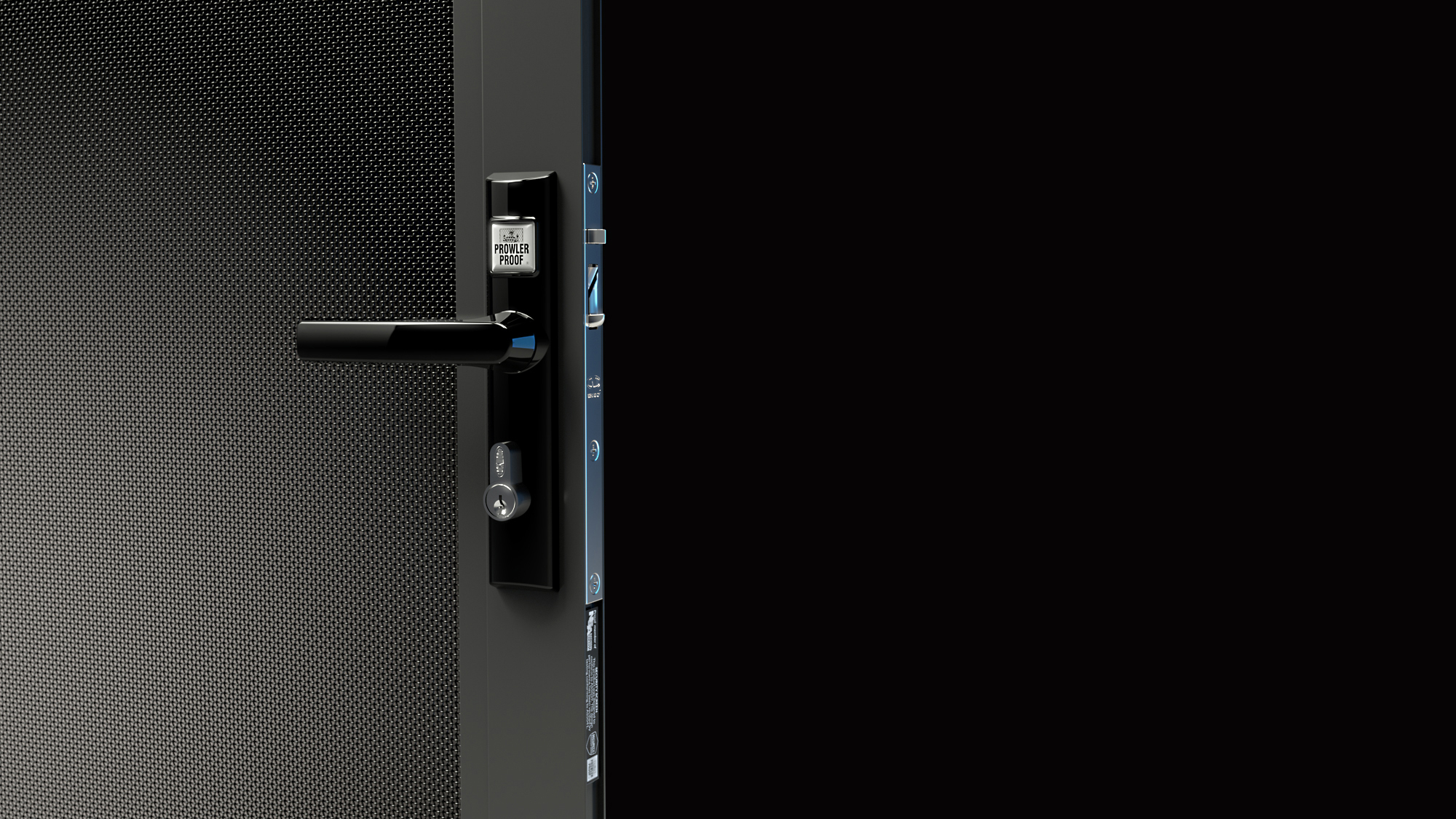
What makes a “best on the market” screen isn’t a buzzword. It’s materials, build method, and proof it’s been tested to relevant Australian Standards. For example, Prowler Proof positions its screens around a fully welded frame (rather than screwed/riveted corners) and performance testing against Australian Standards requirements.
Wired vs perforated aluminium – ForceField vs Protec
If security screens are your starting point for home security, these two Prowler Proof options cover most Logan homes, it really comes down to what you want your screen to do day to day:
ForceField: ideal when you want maximum airflow and visibility, a premium “open” feel for key entry points and windows without sacrificing protection.
Protec: ideal when you want more privacy and glare reduction while still getting strong security, great for street-facing areas, side access, and spots where you’d prefer people can’t easily see in.
If you’re unsure, the practical approach is simple: use ForceField where you want clear outlook and breezes, and Protec where you want extra privacy and a more discreet finish.
What actually makes a “best security screen”
When comparing products, focus on build and proof, not marketing fluff:
Welded frame construction: Prowler Proof highlights fully welded frame corners and perimeter bonding (a durability and finish point versus screw/rivet assembly).
Material choice: ForceField is described as using a heavy-duty aluminium frame with 316 marine grade stainless steel mesh (good context for coastal or harsh environments).
Performance testing + Standards: Prowler Proof publishes performance testing pages and references compliance with relevant Australian Standards (including AS 5039 in their materials guidance, and performance test pages for ranges like ForceField).
Warranty backing: they promote a 10-year full replacement warranty (replacement rather than repair) across doors and window screens.
Range selection by need: they position different ranges for lifestyle and priorities (e.g., ForceField for airflow/visibility; Protec for more privacy).
Conclusion
Home security doesn’t have to be complicated. The key is to make your home harder to access, more visible, and better protected at the places that matter most. In Logan, where unlawful entry trends have stayed elevated in recent years, starting with strong physical barriers like security screens and security doors is one of the most practical ways to reduce risk.
Ready to take the next step?
Book a free measure and quote with Ajay Security (Logan + surrounds), or download the home security checklist to identify the entry points you want secured before your appointment.